


Helping Children with Learning Difficulties: How Occupational Therapy Builds the Brain’s Learning Foundations

By Heather Hodgins Chan, OT Reg. (Ont.), Psychotherapist
On The Ball Pediatric Physio and Occupational Therapy
Families looking for support for children with learning challenges often explore occupational therapy as part of their child’s development plan. At On The Ball Pediatrics, with locations in Kanata and Orleans, occupational therapists work with children to strengthen the foundational brain and body systems that support attention, reading, writing, and academic learning.
Learning does not begin in the classroom. It begins in the body. Occupational therapy helps build the foundational skills that support attention, reading, writing, and higher level thinking.
When parents bring their child to occupational therapy because of learning difficulties, one of the most important conversations we have early on is about how the brain develops. Many families understandably focus on the academic challenges they are seeing — difficulties with reading, writing, attention, or completing schoolwork. However, these higher level academic skills are built on a much deeper foundation within the brain.
At our clinic, this idea is so important to us that we actually have a poster hanging on the wall with a quote from Maria Montessori, who famously said that “the development of movement is fundamental to all learning.” This quote beautifully captures what many modern neuroscientists and therapists now understand — that the body and brain develop together, and that movement plays a critical role in how children learn.
Why Movement and Sensory Development Are Essential for Learning
Learning and cognition primarily occur in the frontal cortex, which is responsible for executive functioning, planning, attention, impulse control, and problem solving. However, the brain does not develop these higher level skills in isolation. Instead, it develops them through a scaffolding process, where more complex abilities are built upon earlier sensory and motor foundations.
Developmental neuroscience research has consistently shown that lower brain systems and body based experiences organize first, providing the foundation upon which higher cognitive skills are built (Perry & Szalavitz, 2017; Siegel, 2018).
This concept is sometimes illustrated through what educators and therapists refer to as the Learning Pyramid. At the base of this pyramid are the body’s sensory and movement systems. These foundational systems include sensory processing, body awareness, balance, postural control, and motor coordination. As these systems develop and integrate, they support the development of more complex abilities such as visual perception, language, attention, and eventually academic learning.
In other words, the brain relies on a scaffolding of development. When the foundational systems are not fully organized, the higher level skills required for learning can become much more difficult.
Occupational therapists are trained to look carefully at these foundational systems. During an initial assessment, we sit down with families and gather a detailed history about the child’s birth history, early development, movement patterns, sensory sensitivities, and developmental milestones. Understanding how the brain and body have developed over time helps us identify where the scaffolding may need additional support.
One important area that occupational therapists examine is body awareness and sensory processing. Children must be able to accurately feel and understand where their body is in space in order to sit upright, coordinate their hands, move their eyes smoothly across a page, and maintain attention during learning tasks.
The proprioceptive system, which provides information from muscles and joints about body position, plays an important role in this process. When proprioceptive input is well integrated, children develop a strong sense of body awareness, which supports posture, coordination, and regulation.
Another foundational system is the vestibular system, located in the inner ear, which helps the brain process movement, balance, and spatial orientation. Vestibular and proprioceptive systems work closely together to support postural stability, attention, and visual tracking — all skills that are required for reading and writing.
When these systems are not fully integrated, children may experience difficulties with attention, coordination, visual tracking, and motor planning. These challenges can sometimes show up as learning difficulties in the classroom.
How Occupational Therapy Supports Children with Learning Difficulties
One example involves bilateral coordination, which refers to the brain’s ability to coordinate both sides of the body together. Bilateral coordination helps build cross body awareness, which is essential for activities such as reading, writing, and copying information from the board.
When children cross the midline of their body — for example when reaching across the body with one hand — both hemispheres of the brain must communicate with each other through neural pathways such as the corpus callosum. Activities that strengthen bilateral coordination can therefore help support the neural communication required for many learning tasks.
Occupational therapy sessions often include cross body coordination activities, rhythm based movement games, and motor exercises that encourage the brain to integrate both sides of the body. These activities are typically presented in fun and engaging ways so that children are motivated to participate.
Another area that occupational therapists examine is the presence of primitive reflex patterns that may still be influencing a child’s development.
Primitive reflexes are automatic movement patterns that are present in infancy and are gradually integrated as the brain matures. However, in some children these reflexes may remain active beyond the early years. Research from the Institute for Neuro Physiological Psychology (INPP), including work by Sally Goddard Blythe, has highlighted the potential relationship between retained reflex patterns and learning difficulties (Goddard Blythe, 2017; Goddard Blythe, 2021).
Two reflexes that are often discussed in relation to learning are the Asymmetrical Tonic Neck Reflex (ATNR) and the Symmetrical Tonic Neck Reflex (STNR).
When these reflexes remain active, children may experience difficulties with crossing midline, coordinating eye movements, maintaining posture at a desk, and coordinating the eyes when shifting between near and far visual targets.
For example, some children may have difficulty looking up at the board and then back down to their paper, which requires smooth convergence and divergence of the eyes. Others may have difficulty crossing midline when writing or copying information across the page.
Occupational therapists often incorporate cross body coordination activities, rhythm based games, and movement exercises that help support the integration of these early motor patterns and strengthen communication between different parts of the brain.
In addition to movement based work, occupational therapy sessions often include activities that strengthen executive functioning skills, which are essential for learning. These skills include attention, impulse control, working memory, and flexible thinking.
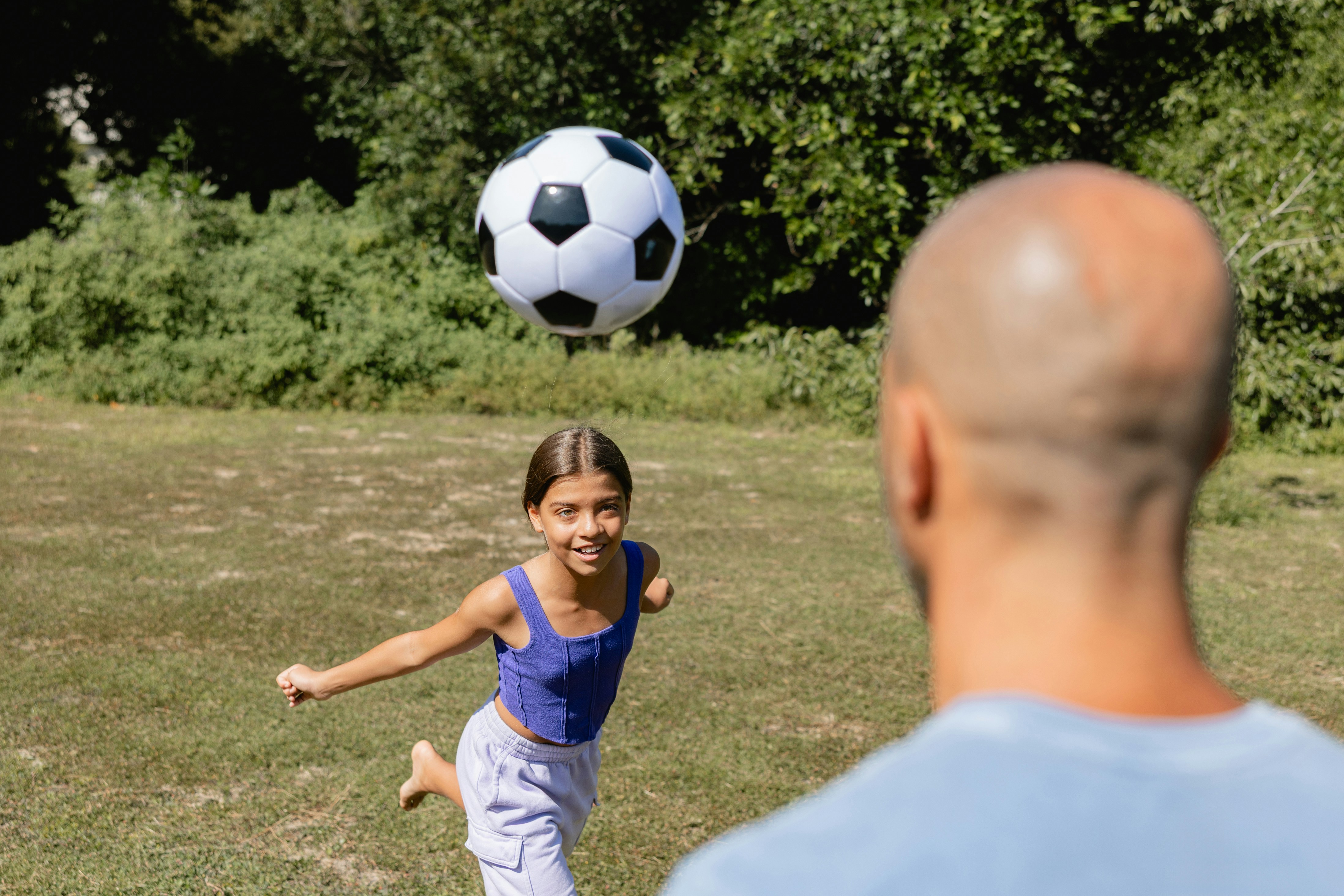
For example, children may play games such as Red Light, Green Light, Dance Freeze, or jumping and freezing games on a trampoline. These playful activities help exercise the brain’s impulse control systems by requiring children to start and stop their movement quickly, listen for cues, and regulate their actions.
Occupational therapists may also work on auditory discrimination skills, helping children learn to identify and locate sounds in their environment. Activities might include identifying which sound is closest to the body versus which sound is further away, or distinguishing between similar sounds.
Pediatric Occupational Therapy Support in Kanata and Orleans
Visual perceptual skills are another important area of development. These skills include visual discrimination, visual memory, visual tracking, and visual spatial awareness, all of which play an important role in reading and writing.
By targeting these foundational systems — movement, sensory processing, reflex integration, attention, and perception — occupational therapy helps organize the neural networks in the brain that support learning.
When the body becomes more organized and regulated, children often find that focusing, reading, writing, and participating in school activities becomes easier.
Rather than focusing only on the academic symptoms, occupational therapy works to strengthen the underlying brain body systems that support learning.
With the right support and the right scaffolding in place, children’s brains can continue to grow, adapt, and build the skills they need to succeed.
Parents who are looking for occupational therapy to support learning difficulties, attention challenges, or motor development can visit On The Ball Pediatrics in Kanata or Orleans. Our therapists work closely with families to build the foundational sensory, movement, and regulation skills that help children thrive both in school and in everyday life.
References
Goddard Blythe, S. (2017). Assessing neuromotor readiness for learning. Child Care in Practice.
Goddard Blythe, S. (2021). The role of primitive reflexes in learning and development. Frontiers in Public Health.
Perry, B. D., & Szalavitz, M. (2017). The Boy Who Was Raised as a Dog: And Other Stories from a Child Psychiatrist's Notebook.
Siegel, D. J. (2018). The Developing Mind: How Relationships and the Brain Interact to Shape Who We Are.
Montessori, M. (2019 edition). The Absorbent Mind.





.svg)